Core principles

Listening to community to design better cultural living space
Our founders had never worked directly with architects before, and it is clear that no Wumpurrarni person has ever been asked how they want their homes to be. For them, housing has almost only ever been experienced as oppression of culture. In 1968 when equal wages came in, cattle stations across the Barkly got rid of Aboriginal workers who they refused to pay, and so fringe dwelling town camps were formed. Although there's been a few examples of agency in design over the past five decades, the past 15 years of government controlled housing brought about by the intervention has seen many steps backwards.
For most Australians, shaping a home involves reading Home Beautiful magazines, checking out display homes, and exerting agency in shaping homes around their families and their lives. For our founders and their ancestors since their lands were stolen, such opportunities have never existed, until now.
Our team of architects and designers are learning from our founders who have deep knowledge of how to live in hot and arid climates, and this collaboration is shaping engagement processes in design that are replicable and scalable in other remote communities.
Most Aboriginal people have never experienced living in a well designed home that is shaped by climate and culture, and so our pilot is going to see construction of "Explain Homes". These will be the first ever display homes built for remote community-living people, designed by Wumpurrarni people for Wumpurrarni people.
Engaging industry partners to improve efficiencies in construction
We have an exciting team of non-Indigenous people with a rich diversity of experience in design, construction and story-telling.
Wilya Janta is engaging in high-level commercial, construction and strategic relationships with industry partners who see the opportunity and are hungry for innovation and for Housing Justice for First Nations people.
Embedding high thermal performance and climate resilience into the new housing model
We have an exciting team of non-Indigenous people with a rich diversity of experience in design, construction and story-telling.
Wilya Janta is engaging in high-level commercial, construction and strategic relationships with industry partners who see the opportunity and are hungry for innovation and for Housing Justice for First Nations people.
Ongoing evaluation and iterative design
Many Aboriginal people express frustration at being subjected to too much research which usually makes no difference to the challenges they face, and this opinion is shared by our founders. We know that deep reflection and learning is very important to create better ways, and are embedding community-led evaluation that uses meaningful scientific and technical experts but is founded upon deep Wumpurrarni knowledge, mukunjungu.
Wilya Janta is committed to learning and re-learning as we go, and placing community at the heart of these learnings so that they are the ones in control of the knowledge that is gained.
Wilya Janta is committed to formal training and we plan to develop Local Design Experts with each future project we are invited to contribute to, to leave communities with expertise in design engagement for all future proposed projects.
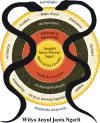
Our Ngarli (seed) represents the core principles that guide our work. At its centre is Jangalki Manu-Warinyi Ngarli—the spirit of the Country—grounding everything in culture, place and connection to land. This is held by Marlungu & Ngurumulla (family and ancestors) and Wumpurrarni (all Aboriginal people), recognising the strength of community, knowledge and collective responsibility.
Around this core sit the partners and systems we work with—funders, builders, designers and others—each contributing to shared outcomes. The outer layer, Mapu Anyul, reflects all of us working together, guided by respectful reciprocity.
Together, the Ngarli shows that meaningful change grows from a strong cultural foundation and is strengthened through collaboration.